
28 de March de 2026
Benefits of QR Code Payments for LATAM Merchants

QR code payments are transforming how businesses in Latin America handle transactions. They solve key issues like high cash dependency, fragmented payment systems, and limited banking access. By enabling instant digital payments through smartphones, merchants can reduce costs, improve cash flow, and cater to both unbanked and digital-first consumers. Countries like Brazil (with Pix) and Argentina (via digital wallets) are leading adoption, while Mexico faces challenges with cash dominance. QR codes also lower transaction fees, simplify cross-border payments, and integrate local payment methods, helping merchants grow in diverse markets. Partnering with specialised providers ensures compliance and smooth operations in this evolving payment landscape.
Payment Challenges for LATAM Merchants
High Dependence on Cash Payments
In many parts of Latin America, cash remains the dominant payment method, creating a host of operational headaches for merchants. Managing cash increases the risk of theft, makes accounting more complex, and limits access to real-time sales data. These issues not only affect efficiency but also alienate digital-first consumers who favour contactless or mobile payment options.
Merchants who rely solely on cash risk losing revenue opportunities. Studies show that adding local digital payment options can increase revenue by up to 12% [1]. For example, in Mexico, cash-based voucher systems like OXXO represent around 44% of consumer transactions [1]. Without offering digital payment alternatives, merchants struggle to tap into the full market potential. QR code systems have emerged as a practical solution, allowing for easy and secure digital payments.
But cash isn’t the only hurdle; the region’s fragmented payment systems add another layer of complexity.
Fragmented Payment Systems
The payment landscape across Latin America is anything but uniform. Each country has its own preferred methods, making it challenging for merchants to navigate. In Brazil, Pix real-time transfers account for about 40% of online transactions [1]. In Colombia, PSE bank transfers make up roughly 34% [1]. Argentina leans heavily on digital wallets, which dominate with 46% of transactions [1]. Meanwhile, in Chile, credit cards still reign, representing 60% of e-commerce sales volume [1].
This patchwork of payment preferences forces merchants to juggle multiple systems, each with varying settlement times. Cross-border transactions add to the complexity, as international cards often face higher decline rates compared to local payment methods. This limits merchants’ ability to reach consumers who favour trusted, local payment options.
And then there’s the challenge of serving the unbanked population.
Serving the Unbanked Population
Despite progress in financial inclusion, a significant portion of Latin America’s population remains unbanked. Many people lack access to traditional banking services due to high rates of informal employment and limited credit availability [1]. At the same time, digital adoption is growing. In Mexico, for instance, around 19 million people actively use neobanks [2]. This gap between digital adoption and traditional banking access highlights the need for alternative payment methods.
Consumer distrust of digital transactions and fears of online fraud further complicate matters [1]. To capture sales from this segment, merchants must offer local alternatives like cash-based vouchers, bank transfer systems such as Colombia’s PSE, or digital wallets. In Colombia, 61% of the population uses at least one digital wallet [2], showing how crucial these methods are for financial inclusion and revenue growth. QR codes also play a key role, enabling merchants to serve both unbanked and tech-savvy customers effectively.
sbb-itb-adc4ce4
How QR Code Payments Address Merchant Problems
QR code payments simplify regional payment challenges by making it easier to transfer money from customers to merchants. Unlike traditional card networks, which may take several days to settle transactions, QR systems enable instant transfers directly from a customer’s digital wallet or bank account to the merchant’s account. This process begins as soon as the customer scans a static or dynamic QR code, solving issues like cash flow delays and integration hurdles [3].
Instant Settlements and Improved Cash Flow
The speed of QR payments gives merchants quicker access to funds, which is a game-changer for managing working capital. By skipping the drawn-out settlement periods associated with credit card networks, merchants can access their money almost immediately. This is especially helpful in unpredictable markets, where liquidity is essential for tasks like restocking inventory, paying suppliers, or covering operational costs without delays.
Another advantage is cost efficiency. Merchants can process QR payments using smartphones or tablets, eliminating the need for expensive point-of-sale equipment [3].
Interoperability Across Payment Platforms
QR codes also solve the problem of fragmented payment systems by enabling transactions to flow smoothly across different banks, digital wallets, and payment apps. This means customers don’t need to switch services to make a payment. In regions where payment preferences vary – such as Brazil with Pix, Colombia with PSE, or Argentina with digital wallets – this flexibility reduces checkout friction and makes it easier for merchants to cater to a wider range of customers.
Lower Transaction Costs and Higher Profit Margins
QR code payments often come with lower transaction fees, which can significantly benefit merchants. For example, in the US, PayPal charges 2.29% plus 9p per transaction for QR payments, compared to 2.99% plus 49p for standard card transactions. Since most payment processor fees range from 2% to 3% of the transaction amount, the reduced rates for QR payments – about 0.7% lower in percentage fees and roughly 40p less in fixed fees – can make a noticeable difference [3].
Additionally, many platforms provide static QR codes at no cost, while dynamic QR codes – customised for each transaction – may come with fees ranging from £5 to £110, depending on the provider. Beyond saving money, QR codes also enhance the checkout experience, which can boost customer satisfaction. On top of that, they allow merchants to collect valuable data, such as customer names, purchase amounts, and preferred payment methods. This data can be used to fine-tune future marketing strategies [3].
Business Benefits of QR Code Payments for LATAM Merchants
Higher Checkout Completion Rates
QR code payments address the issue of cart abandonment by offering the payment methods that shoppers in Latin America prefer. In this region, options like local eWallets and real-time transfers – think Brazil’s Pix – are essential for boosting conversion rates. When merchants fail to include these localised payment options, customers often abandon their purchases.
The issue isn’t just about what consumers prefer; it’s also about what’s accessible. Many people in Latin America either don’t have credit cards or choose not to use them for online transactions. QR-based systems eliminate this obstacle by linking directly to digital wallets or bank accounts, allowing instant transfers without relying on traditional card networks. This approach also integrates cash-reliant consumers into the digital payment ecosystem, making it easier for merchants to connect with a tech-savvy and growing customer base.
Reaching Digital-First Consumers
Latin America’s population is primed for QR code adoption. Countries like Colombia, Argentina, and Brazil have a young, mobile-first demographic, with median ages hovering around 32. This generation of digital natives values seamless mobile experiences and prioritises convenience over older payment methods.
QR codes also bridge the gap between cash and digital payments. For example, services like OXXO in Mexico and PagoEfectivo in Peru allow users to generate QR codes online and pay in physical locations. This approach helps merchants tap into a broader audience, including those who don’t have bank accounts or credit cards, by converting cash-based habits into digital transactions.
Consumer Preference for Instant Payments
As digital engagement increases, so does the demand for instant payment options. Consumers today expect fast, hassle-free checkouts, similar to the convenience offered by digital wallets. QR codes deliver on this expectation by enabling real-time fund transfers with immediate confirmations, eliminating the delays often associated with traditional payment methods.
For merchants, meeting these expectations leads to higher conversion rates. Businesses with physical locations should ensure stable Wi-Fi connections to support smooth QR code transactions, reducing technical hiccups that could disrupt the checkout process.
Regional Differences in QR Code Adoption
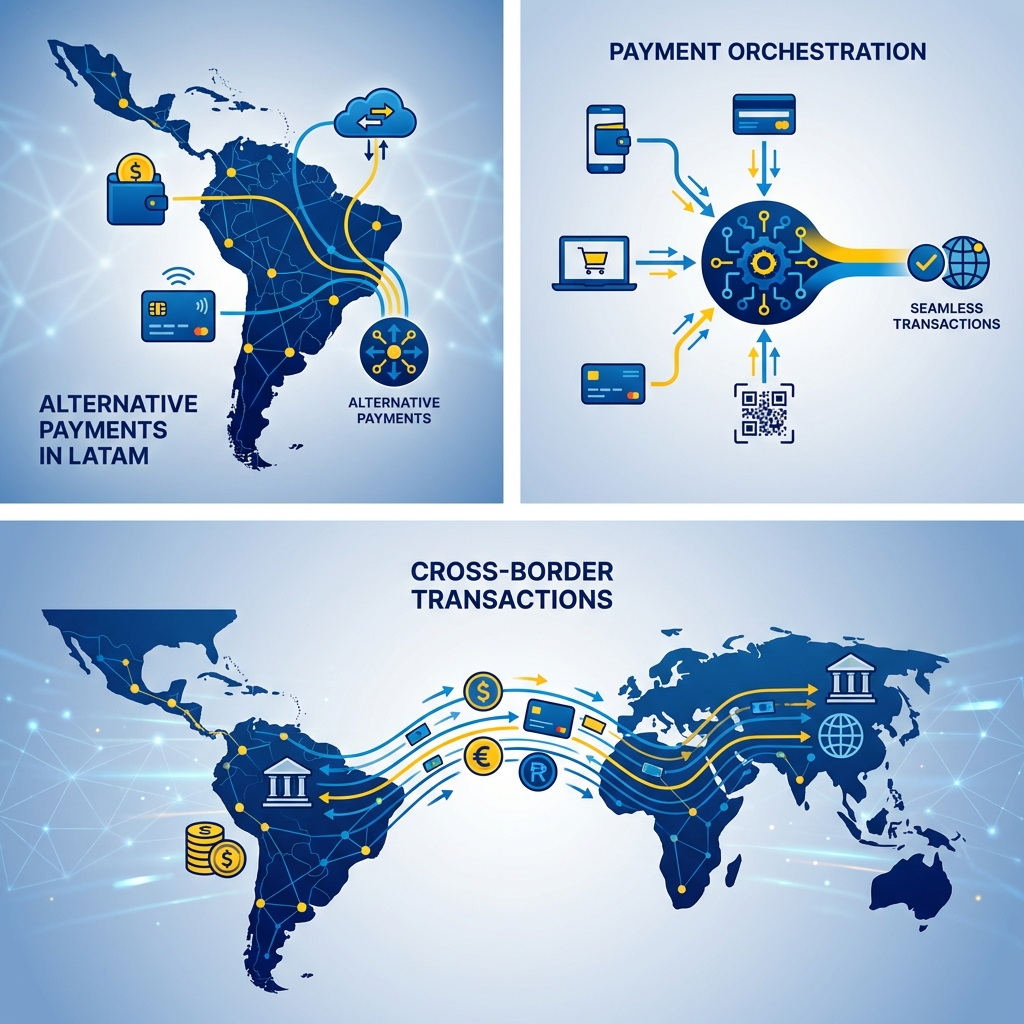
QR Code Payment Adoption Statistics Across Latin America
Brazil: The Pix System
In Brazil, Pix has become the go-to payment method for QR code transactions in Latin America. Introduced by the central bank as a mandatory instant payment system, Pix now handles about 40% of online transactions and 32% of in-person purchases [1][4]. Around 77% of Brazilian consumers use Pix regularly, and by 2024, its transaction volumes surpassed those of credit and debit cards combined by approximately 80% [4][5].
This shift marks a major change in Brazil’s payment landscape. As Marcelo Moussalli, Managing Director and Latin America Product Head at Bank of America, explains:
After many decades of the status quo in payments, Latin America is going through a major transformation [4].
For businesses in Brazil, accepting Pix is no longer optional. Its instant settlements and low transaction fees make it a more appealing choice compared to traditional card networks or boleto payments [1]. The platform’s widespread success serves as a model for other merchants in the region.
Argentina: Growth of Transferencias 3.0
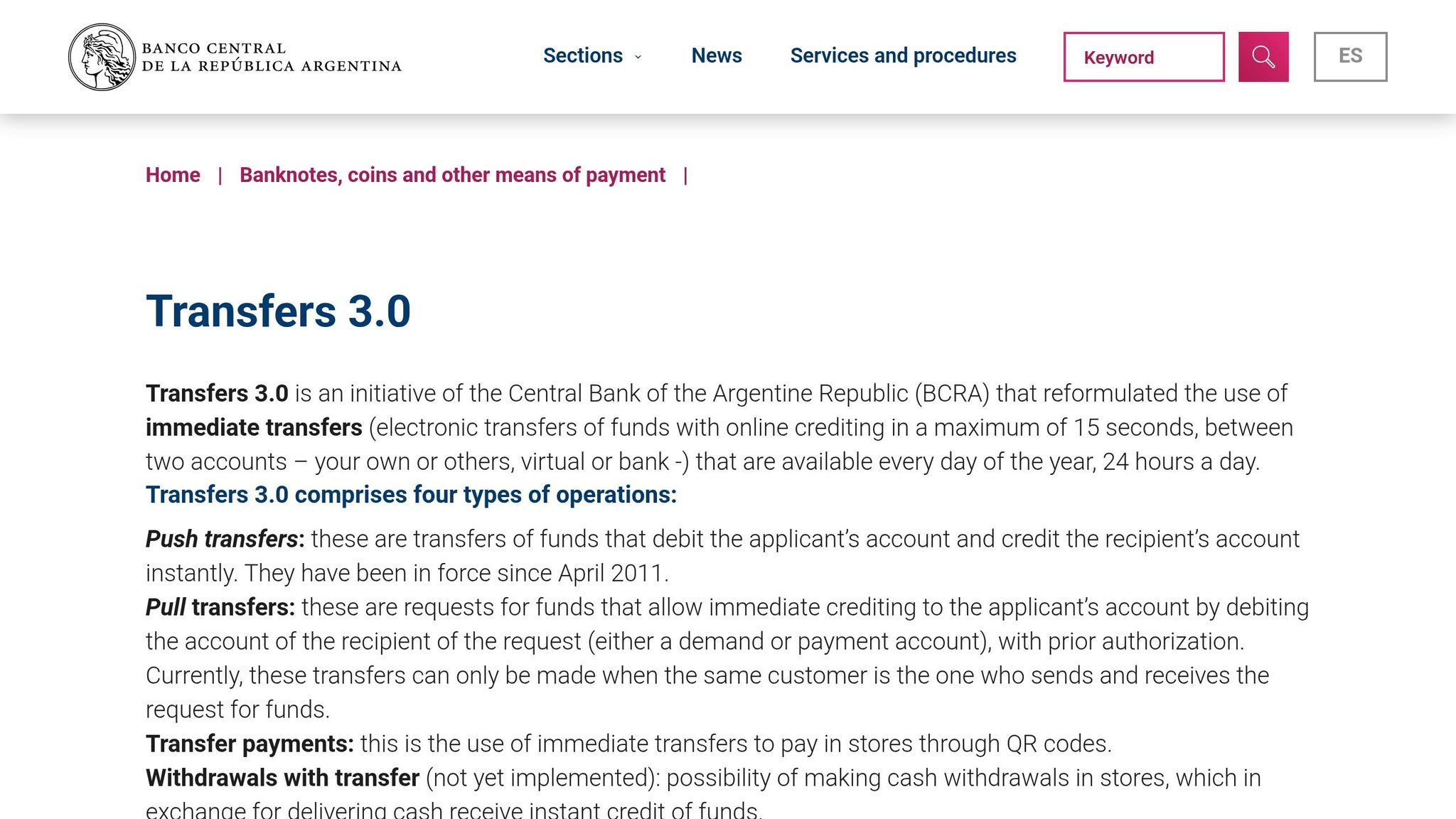
Argentina has taken a different path, relying on digital wallets like Mercado Pago and MODO to drive QR code adoption. These wallets now hold a 46% share of the e-commerce market [1]. The government’s Transferencias 3.0 initiative has further boosted adoption by requiring interoperability between banks and digital wallets, ensuring no single provider can dominate the ecosystem.
This shift toward digital wallets is largely a response to Argentina’s economic challenges. High inflation and banking restrictions have led consumers to embrace digital wallets as a way to manage their finances and bypass traditional banking barriers [1]. For businesses, this means they need to work with leading wallet providers rather than relying solely on global card networks, which often face higher decline rates in Argentina. These localised solutions highlight the unique challenges merchants face in the country.
Mexico: CoDi Implementation Challenges
In Mexico, the story is quite different. Despite government efforts to promote CoDi, QR code usage remains limited. Cash continues to dominate, accounting for 85% of retail transactions, especially for purchases under £50 [4]. Cash-based OXXO vouchers alone make up 44% of consumer transactions [1], creating a market that blends cash and digital payments.
For merchants in Mexico, the challenge isn’t just introducing QR codes – it’s adapting to a market that still heavily depends on cash-voucher systems alongside digital options. These regional differences highlight the importance of systems that can integrate various local payment methods to meet diverse consumer needs.
Cross-Border Payment Solutions for Scaling QR Payments
Multi-Country Integration
For merchants using QR payments across LATAM, having a unified integration system is crucial for scaling efficiently. Dealing with separate integrations for each country adds unnecessary complexity. Cross-border payment providers address this by offering single API integrations that connect over 250 local payment methods across more than 12 countries. This approach simplifies access to various QR payment systems and local alternatives, eliminating the need for separate contracts in each market [6].
Diana Vorniceanu from The Paypers highlights the importance of this approach:
Payments work as a crucial pillar for strategic growth and, when managed through a unified platform, they can simplify operations, drive cross-border trade, and have a significant impact on businesses in innovative ways [6].
By integrating a fast, localised payment process at checkout, merchants can boost conversion rates by up to 20%. This is especially important given that cross-border transactions make up 50% of total operations in LATAM [6]. These streamlined integrations also simplify compliance and risk management, making expansion smoother.
Regulatory Compliance and Risk Management
Each country in LATAM has its own regulatory framework, creating unique challenges for businesses. Jonathan Wilson, Chief Risk Officer at PayRetailers, explains:
Latin America, unlike Europe, has the particularity that, despite being very close, each market operates under unique regulations [8].
Expanding into these markets often involves navigating complex bureaucracy and setting up local entities, which can be time-consuming.
Payment providers with regional expertise help merchants overcome these obstacles. They employ in-house compliance teams and maintain local offices in key markets such as Argentina, Brazil, Chile, Colombia, Mexico, Costa Rica, Paraguay, Peru, and Uruguay [8]. These providers also implement strong risk management tools like data encryption, two-factor authentication, and transaction monitoring. This is particularly important considering that around 37% of merchants are concerned about fraud in digital payments [7]. As Wilson notes:
Our strong risk and compliance management programmes allow PayRetailers to offer flexible and instant payments to businesses whilst keeping fraud and other risks from eroding revenue [8].
With these measures in place, merchants can focus on growing their business without worrying about regulatory hurdles.
Unified Settlements for Simpler Operations
Managing multiple currencies and cross-border settlements is a significant challenge for merchants expanding QR payments. Unified settlement solutions complement the instant nature of QR payments by enabling businesses to receive funds globally through a single platform. This provides better visibility into cash flow across all markets [6].
This is especially critical in regions like Costa Rica, where international payment methods account for 77% of total e-commerce volume, or Chile, which has seen a 79% rise in international e-commerce transactions [6]. For high-volume merchants processing over £400,000 monthly, unified settlements in 24 currencies drastically simplify financial operations. Instead of juggling payments from different providers in each country, merchants can manage all transactions through one interface, reducing accounting headaches and improving cash flow across their LATAM operations [6].
Conclusion
QR code payments have reshaped how transactions are conducted in LATAM, reducing reliance on cash, connecting fragmented systems, and expanding access to financial services. In Brazil, by 2024, Pix transaction volumes surpassed the combined totals of credit and debit cards by around 80% [5]. Similarly, cash usage for in-person sales dropped sharply, from 68% in 2014 to just 17% in 2024 [9]. This transformation is more than just about convenience – it represents a major overhaul of the region’s payment landscape.
For businesses, the benefits are clear. Merchants gain from instant settlements that improve cash flow, lower transaction fees that increase profitability, and better conversion rates by catering to digital-savvy customers. In Peru, for instance, 54% of consumers reported using the Yape app for in-person payments [9]. With Latin America expected to lead global real-time payment growth at a compound annual growth rate (CAGR) of 29% between 2022 and 2027 [9], the potential for businesses is immense. However, realising these benefits requires infrastructure tailored to the region’s unique challenges.
Success in LATAM goes beyond simply adopting QR code payments. As Andy McHale from Spreedly explains:
Latin America offers scale, velocity, and demand. What you’re not going to get is uniformity [5].
Each market in the region has its own complexities, requiring customised solutions. Businesses processing over £400,000 monthly need infrastructure capable of handling local routing, regulatory compliance, and settlements across multiple currencies. Navigating these challenges calls for specialised expertise.
To address these hurdles, partnering with a regulated cross-border payment provider is essential. Providers like PayRetailers offer access to over 300 local payment methods – including Pix, Yape, and Transferencias 3.0 – through a single API integration. Backed by compliance teams in nine key markets, this approach allows businesses to focus on growth while the provider manages regulatory and technical complexities. LATAM’s commerce future is digital, mobile-first, and powered by QR code technology. Merchants who embrace this shift with the right partner will position themselves for significant growth.
FAQs
Do I need a bank account to accept QR payments in LATAM?
In LATAM, accepting QR payments doesn’t always require a bank account. Many local QR payment systems operate through alternative financial networks, offering flexibility for businesses and individuals. That said, having a bank account can make things smoother. It simplifies settlement processes, helps manage funds more efficiently, and ensures compliance with regulatory standards.
How do QR payments reduce declines versus international card payments?
QR payments help cut down on declines by leveraging local acquiring infrastructure and adhering to LATAM-specific regulations. This method reduces payment failures, making transactions smoother and boosting conversion rates for merchants. By eliminating common challenges tied to international card payments, QR payments create a more reliable and efficient payment process.
What should I look for in a LATAM QR payments provider for compliance and settlements?
Look for a provider that prioritises robust compliance systems, has deep knowledge of local regulations, and ensures secure settlement processes. Features like unified settlements across multiple currencies and local acquiring capabilities are essential for meeting regional compliance standards and ensuring seamless transaction reconciliation.
Related Blog Posts
Latest news.


